Energy Secrets of Glastonbury Tor by Nicholas Mann
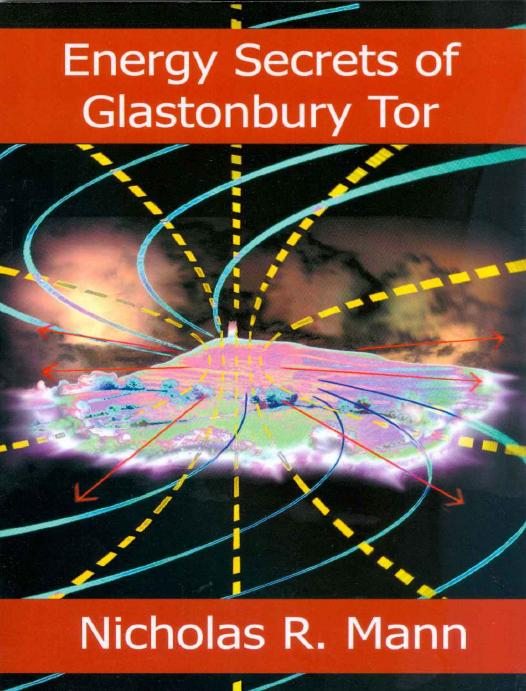
Author:Nicholas Mann [Mann, Nicholas]
Language: eng
Format: epub, azw3, mobi, pdf
Publisher: Green Magic
Published: 2011-10-09T05:00:00+00:00
THE TOR AND VALLEY TODAY
Most notable among the recent acts that have taken place on or beside the Tor are the building of the reservoir for the waters of the White Spring in 1872 and the occupancy of the Chalice Well property by Alice Buckton from 1913 to her death in 1944. The first was a profane act that caused the ancient significance of the White Spring to become quite lost, while the second was entirely different. The presence of Alice Buckton allowed the spiritual significance of Chalice Well to resume and flourish.
After the brief period of time in the 18th century when the valley and its springs became a spa, the inn maintained a commercial presence on the site. First known as the Anchor Inn for reasons not entirely clear, it became Tor House in the early 19th century. Although this building had an attractive Georgian fac¸ ade it was a jumble at the rear, retaining some features of the earlier inn, including the animal byres. Tor House must have belonged to a fairly wealthy family at some point, for there is a photo circa 1860 of the female members of the family posing outside the house in huge black dresses. The property was acquired shortly after this by a Roman Catholic Order based in Belgium, who turned it into a seminary. The Order made Tor House the headmasterâs house, and built a formidable four-storey school building on the junction of Well House Lane and Chilkwell Street. I know very little about the motives of the Order, why they chose Glastonbury or Chalice Well, but they were not on the site for very long before financial difficulties made them give up.
Alice Buckton was drawn to Glastonbury after meeting Wellesley Tudor Pole in 1907. She heard from him the story of the blue bowl, found in Brideâs Well, which many at the time believed to be the Holy Grail or at least the cup used by Christ at the last supper. The story of this remarkable object, how it got to be in the sluice known as Brideâs Well and what it inspired, is found in Patrick Benhamâs book, The Avalonians. Tudor Poleâs books provide accounts of its significance. In 1912 Alice Buckton acquired the Well. She was a talented teacher and writer with a warm nature, who wished to further the education of children and the cause of women. She held a universal metaphysical view, âthe one in the manyâ, and taught self-realisation, especially through the creative arts. She felt at home with the mystical circle around Tudor Pole â and others who were drawn to Glastonbury at this time â especially because of their emphasis on the restoration of the feminine to spirituality. She wished to establish a festival centre in Glastonbury, and put on many plays at Chalice Well, the most famous being Eager Heart. She also tried to establish a college for women at the Well, having success with arts and crafts. Dion Fortune, who moved
Download
Energy Secrets of Glastonbury Tor by Nicholas Mann.azw3
Energy Secrets of Glastonbury Tor by Nicholas Mann.mobi
Energy Secrets of Glastonbury Tor by Nicholas Mann.pdf
This site does not store any files on its server. We only index and link to content provided by other sites. Please contact the content providers to delete copyright contents if any and email us, we'll remove relevant links or contents immediately.
Becoming Supernatural by Dr. Joe Dispenza(8214)
Crystal Healing for Women by Mariah K. Lyons(7930)
The Witchcraft of Salem Village by Shirley Jackson(7274)
Inner Engineering: A Yogi's Guide to Joy by Sadhguru(6793)
The Four Agreements by Don Miguel Ruiz(6765)
The Power of Now: A Guide to Spiritual Enlightenment by Eckhart Tolle(5781)
Secrets of Antigravity Propulsion: Tesla, UFOs, and Classified Aerospace Technology by Ph.D. Paul A. Laviolette(5371)
The Wisdom of Sundays by Oprah Winfrey(5160)
Room 212 by Kate Stewart(5119)
Pale Blue Dot by Carl Sagan(5007)
Fear by Osho(4737)
The David Icke Guide to the Global Conspiracy (and how to end it) by David Icke(4717)
Animal Frequency by Melissa Alvarez(4470)
Rising Strong by Brene Brown(4459)
How to Change Your Mind by Michael Pollan(4356)
Sigil Witchery by Laura Tempest Zakroff(4243)
Man and His Symbols by Carl Gustav Jung(4135)
The Art of Happiness by The Dalai Lama(4130)
Real Magic by Dean Radin PhD(4128)
